
When it comes to fine dining, few culinary traditions command as much respect and admiration as French cuisine. At the very pinnacle of this gastronomic world sits a dish that beautifully marries rustic simplicity with pure luxury duck confit. Rooted in centuries of tradition, this classic technique was initially created out of pure necessity long before the luxury of modern refrigeration existed. Centuries ago, people relied heavily on clever Food Tips & Guides to preserve meats through the harsh winter months, discovering that cooking meat slowly in its own rendered fat effectively sealed it from spoilage. Today, this brilliant method has transformed from a survival tactic into a celebrated culinary art form, prized globally for producing some of the most incredibly tender, melt-in-your-mouth meat imaginable.
Preparing this classic French delicacy at home might initially seem intimidating to the average home cook, but it is actually an incredibly forgiving process that rewards patience above all else. The magic of the confit method lies entirely in the transformative power of low and slow cooking, which gently breaks down tough connective tissues until the meat effortlessly pulls away from the bone. Unlike quick-cooking methods that can easily dry out poultry, submersing the protein entirely in rich fat ensures that every single ounce of moisture is locked tightly inside. As you embark on this rewarding culinary journey, your kitchen will be filled with a rich, savory aroma that rivals the finest Parisian bistros, setting the perfect stage for an unforgettable homemade feast.
Understanding the Essential Ingredients for Duck Confit
Achieving restaurant-quality results at home begins with a deep appreciation for the minimal yet crucial ingredients required for this traditional masterpiece. The absolute star of the show is the duck leg, specifically a whole leg quarters that includes both the thigh and the drumstick, as this specific cut contains the perfect balance of rich meat and thick skin necessary to withstand prolonged cooking. To properly execute the technique, you will also require a generous amount of pure duck fat to completely submerge the quarters during their long bath in the oven. If sourcing pure duck fat proves difficult or expensive in your local area, there is no need to worry, as you can easily consult a comprehensive Guide to Easy Kitchen Swaps to find excellent alternatives like high-quality olive oil or a neutral lard that will still deliver a beautifully tender texture without compromising the integrity of the process.
Beyond the protein and the cooking medium, the remaining ingredients serve to build a deeply complex flavor profile through a process known as dry curing. A traditional cure relies heavily on a base of coarse kosher salt, which works alongside a fragrant medley of fresh garlic cloves, whole black peppercorns, and fresh sprigs of aromatic thyme. Many traditional chefs also like to toss in a few whole bay leaves or even a whisper of fresh orange zest to cut through the intense richness of the poultry. It is important to remember that the salt used during this initial stage is not merely for seasoning the surface; it plays a critical biochemical role in drawing out excess water from the muscle fibers, which ultimately concentrates the natural flavors and prepares the tissue to absorb the aromatic oils during the slow-cooking phase.
The Art of Curing the Duck Legs Safely
The foundational step to a successful confit lies entirely within the curing process, a crucial phase that simply cannot be rushed or omitted if you want authentic results. To begin, you must generously rub your prepared mixture of coarse salt, crushed garlic, cracked peppercorns, and torn herbs all over every single inch of the duck quarters, paying close attention to the thicker parts of the thighs. Once the meat is thoroughly coated in this fragrant cure, place the pieces in a single layer inside a non-reactive baking dish, cover it tightly with plastic wrap, and transfer it to the coldest part of your refrigerator for anywhere between twelve to twenty-four hours. This extended resting period allows the salt to penetrate deeply all the way to the bone, seasoning the meat from the inside out while simultaneously firming up the flesh so it maintains its shape perfectly during the subsequent cooking process.
Once the curing time has elapsed, you must transition to the critical step of thoroughly rinsing the legs under a gentle stream of cold running water. Failing to wash away the curing mixture completely will result in an overwhelmingly salty final dish that is completely unpalatable, ruining hours of hard work. After every single grain of salt and herb fragment has been thoroughly washed away, place the wet legs onto a clean layer of paper towels and meticulously pat them until they are absolutely bone dry. Ensuring the skin is completely devoid of moisture is paramount because any residual water left on the meat will create steam inside the hot fat, which ultimately boils the protein rather than slow-braising it, preventing you from achieving that coveted traditional texture.
Slow Cooking Method for Perfect Meat Texture
With the curing and drying phases successfully completed, you are finally ready to begin the deeply satisfying process of slow cooking, which represents the very heart of the confit technique. Begin by placing your solid duck fat into a large, heavy-bottomed pot or a deep Dutch oven and heating it over a low flame until it completely melts into a clear, golden liquid. Carefully arrange your dried duck quarters inside the pot, ensuring that they lie relatively flat and are completely and utterly submerged underneath the liquid fat, leaving absolutely no part of the meat exposed to the open air. You can choose to leave the pot covered on your stovetop over the lowest possible flame, or transfer the entire vessel into a preheated oven set to a remarkably low temperature of around ninety-five to one hundred and ten degrees Celsius.
Allow the meat to gently bathe in this warm oil for approximately three to four hours, maintaining a very gentle simmer where only the occasional tiny bubble rises to the surface. This slow, low-temperature environment ensures that the fat renders out beautifully while the meat fibers soften into a luxurious, buttery consistency without ever drying out or becoming stringy. You will know the process is perfectly complete when the meat has visibly shrunk back from the drumstick bone and a simple wooden toothpick can slide effortlessly into the thickest part of the thigh with absolutely zero resistance. At this triumphant moment, remove the pot from the heat source and allow the quarters to cool down completely while remaining fully submerged within their cooking liquid, a step that allows the fibers to reabsorb the rich flavors.
Searing for the Ultimate Crispy Skin Finish
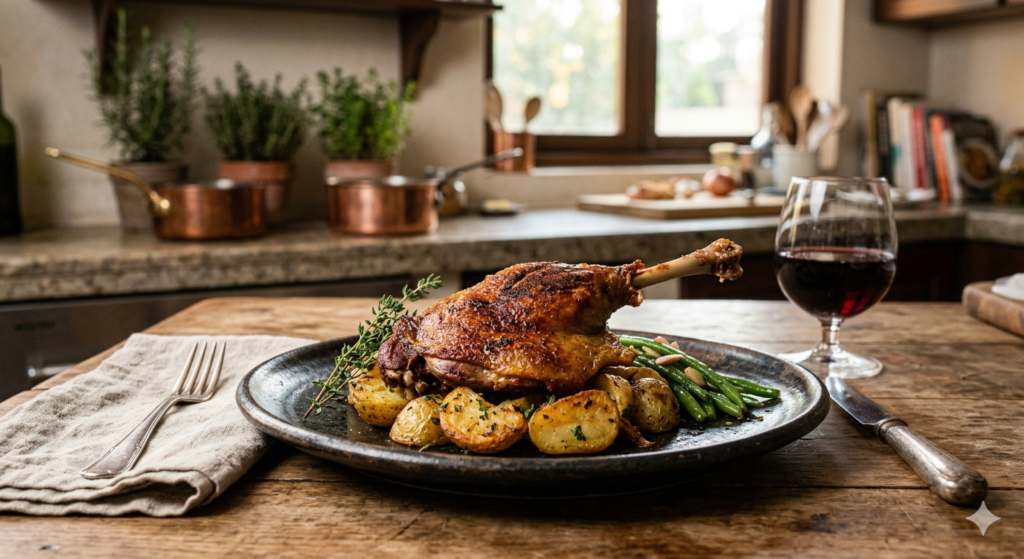
While the long, slow-cooking process yields incredibly tender and juicy meat, it leaves the exterior skin looking somewhat pale, soft, and unappealing to the modern eye. The true hallmark of a masterfully prepared duck confit is the dramatic, irresistible contrast between an ultra-crispy, golden-brown skin and the unbelievably soft, succulent meat hidden immediately beneath it. To achieve this magnificent textural contrast, place a high-quality non-stick skillet or a heavy cast-iron pan over medium heat and add just a single tablespoon of the reserved liquid cooking fat to coat the bottom. Carefully place your cooled legs into the pan with the skin-side facing directly down, allowing the direct heat to slowly render out the remaining surface fat and crisp up the exterior.
During this crucial searing stage, it is absolutely essential to resist the urge to turn the heat up too high, as excessive heat will easily burn the delicate skin before it has a chance to become uniformly crunchy. Keep a watchful eye on the pan for about five to seven minutes, allowing the skin to deep-fry beautifully in its own oils until it takes on a gorgeous, deep mahogany hue. Once the skin has achieved a flawless crackling texture, gently flip the quarter over using a wide spatula and sear the flesh side for a mere sixty seconds, just long enough to ensure the interior meat is warmed completely through to the center. Remove the glistening, crispy portion from the hot skillet and let it rest for just a moment on a wire rack, ready to stun your dinner guests with its professional appearance.
Pairing and Serving Suggestions for the Feast
Now that you have successfully mastered the intricate steps of creating a flawless classic duck confit, the final step to a memorable dining experience lies in selecting the perfect accompaniments to grace your table. In traditional French bistros, it is a time-honored custom to utilize the remaining flavorful fat left in your pot to roast thin slices of potatoes alongside garlic and parsley, creating a legendary side dish known as Pommes Sarladaise. However, because this main course is inherently rich, decadent, and incredibly filling, you may want to balance the heavy profile of the meal by browsing through our collection of vibrant Recipes to find a lighter alternative, such as a crisp green salad tossed in a sharp, acidic mustard vinaigrette or a side of perfectly charred asparagus. This inclusion of bright, acidic elements cuts through the intense fattiness of the meat, creating a harmonious and balanced experience on the palate.
For health-conscious food lovers looking to indulge mindfully, pairing this luxurious protein with simple steamed broccoli or a medley of roasted root vegetables transforms the plate into a wholesome, highly satisfying, and well-rounded Healthy Food option. To elevate your home-cooked dinner into a truly complete, multi-course gastronomic event, the journey should always culminate in a sweet note, allowing your guests to explore a variety of sophisticated artisanal Desserts that provide a refreshing, sweet conclusion to a wonderfully savory meal. Whether you choose to shred the crispy meat over a comforting bowl of French lentils or serve it whole at a formal holiday gathering, this versatile masterpiece bridges the gap between historic comfort food and modern luxury, bringing a delightful touch of global Street Food fusion or high-end fine dining straight to your home table.
Frequently Asked Questions
Can I use regular cooking oil if I cannot find or afford pure duck fat? Yes, you can absolutely substitute pure duck fat with high-quality olive oil or a neutral vegetable oil like avocado oil, as the fundamental slow-cooking technique remains exactly the same, though you will lose some of that distinctively rich, traditional gamey flavor.
How long can I safely store homemade duck confit in my refrigerator? If you store the cooked legs in a clean, airtight container and pour the melted fat over them so they are completely submerged and sealed from the air, the confit can safely keep in the refrigerator for several weeks because the solidified fat acts as a highly effective natural preservative.
What will happen to the final dish if I decide to skip the curing step entirely? Skipping the dry-curing step will severely negatively impact your final results, as the meat will turn out completely bland and unseasoned near the bone, and the muscle fibers will retain too much moisture, causing the delicate leg to completely fall apart and disintegrate during the slow-cooking process.
Is it possible to apply this identical cooking technique to standard chicken legs instead? You can easily apply this exact method to whole chicken legs to create a wonderful dish known as chicken confit, which serves as an excellent budget-friendly alternative, though you will need to reduce the total slow-cooking time slightly since chicken meat is naturally leaner and cooks faster than duck.
How has this traditional French dish been adapted across different modern food cultures? While traditionally served whole alongside roasted potatoes, modern global chefs frequently shred the tender meat to create innovative, high-end fusions, incorporating the crispy protein into gourmet tacos, rich bao buns, and elevated burgers across bustling Street Food markets worldwide.